Greetings

Unless otherwise specified very little post processing is done to the images - cropping, some sharpening, adjusting the brightness/contrast settings, adjusting the saturation and occasionally lightening or darkening.

These photographs are the personal properties of Bob & Cynthia Kaufman. Please do not reproduce, copy, download or print without a written permission from us.

We may be contacted at ornithographer@yahoo.com

Thanks for viewing our blog.

Wednesday, March 20, 2019

Greater White-fronted Goose - Anser albifrons

Every year when we visit Santa Fe Dam for some birding we always see this bird. It had gotten used to urban living and associates itself with the more common Greylags.

In December 2010, a flock of this species visited the Candaba Wetlands in the Philippines. Although they are migrants from northern Asia, the Philippines is not their usual destination during winter.

Santa Fe Dam
March 16, 2018

Canon 5D Mk III, Tamron 150-600 @ 483mm
ISO-800, 1/1000, f13


Candaba Wetlands
December 23, 2010

Canon 5D Mk II, 500 + 1.4X = 700mm
ISO-400, 1/1250, f13


Thursday, March 14, 2019

Tundra Bean Goose - Anser serrirostris

We had barely settled in as retirees to the Philippines when we learned that there was an extremely rare goose seen at the Candaba Wetlands. Thankfully, a friend offered to take us along with him to twitch on this bird. It was luck that as soon as we arrived we already saw this species which was a first time occurrence in the Philippines.

Candaba Wetlands, Pampanga
April 3, 2010

Canon 5D Mk II, 500 + 1.4X = 700mm
ISO-320, 1/640, f9, tripod


Greylag Goose - Anser anser

The Greylag Goose is the species where the domesticated geese originally came from. Most of these birds seen in urban parks are most likely offsprings of the domestic variety that became feral. I've seen them in California and in Sydney, Australia.

Frank Bonelli Regional Park
San Dimas, California
March 2016

Canon 5D Mk III, Tamron 150-600 @ 600mm
ISO-800, 1/100, f11


Sydney, Australia
October 2016

Canon 5D Mk III, Tamron 150-600 @ 450mm
ISO-1250, 1/100, f11


Snow Goose - Chen caerulescens

Snow Geese migrate by the thousands to Southern California, particularly at the Salton Sea. It was strange that we saw one at the Almansor Park (which is a small urban park) in December 2009.

Almansor Park

Alhambra, California
December 12 2009

Canon 30D,  100-400 @ 160mm

ISO-800, 1/320, f6.3


Ross's Goose - Chen rossii

It was at Prado Dam that we've seen this species - first in June of 2007 then in April of the following year. Since it was supposed to be a migrant, we were surprised to see it at that time of the year. Perhaps thinking that the long voyage to the Arctic would be too tiring, it just decided to stick around with the locals.

Prado Dam
Corona, California
April 5, 2008

Canon 40D, 100-400 @ 390mm
ISO-400, 1/800, f10


Wednesday, March 13, 2019

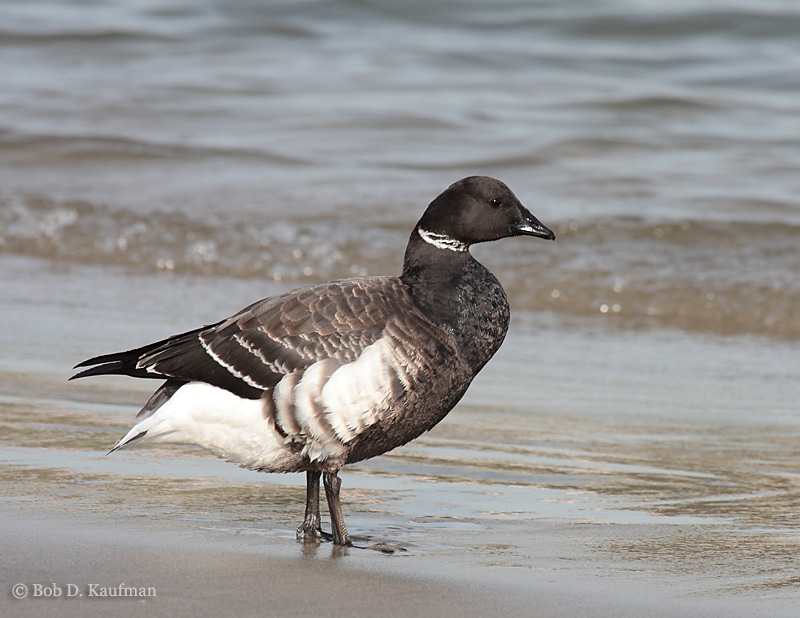
Brant Goose - Branta bernicla

This species is an uncommon migrant to California. I was fortunate to have seen it on three different times and places in southern California.

Legg Lake, South El Monte, CA
June 12, 2007

Canon 30D, 100-400 @ 400mm
ISO-320, 1/800. f10


Cabrillo Beach, San Pedro, CA
January 9, 2010

Canon 40D, 100-400 @ 400mm
ISO-320, 1/640, f9


Bolsa Chica, Huntington Beach, CA
April 2, 2014

Canon 5D Mk III, 300 + 1.4X = 420mm
ISO-500, 1/800, f10


Lesser Whistling Duck - Dendrocygna javanica

This species looks very similar to the Wandering Whistling Duck. What separates one from the other is the region where they reside. The Wandering Whistling Duck is more of a southern bird ranging from Australia north to the Philippines, Indonesia and Borneo while the Lesser is found in the Indian subcontinent and Southeast Asia.

It was on a birding trip to Singapore in April 2010 that we added this species to our life list.

Canon 5D Mk II, 300mm + 1.4X = 420mm
ISO-400, 1/100, f5.6


Fulvous Whistling Duck - Dendrocygna bicolor

Although a resident in Central and South America, this species had expanded its territory in the 1960s to southern Texas, Florida and extreme southern California. In December 2005 there was a stray individual seen at the Whittier Narrows Park in Whittier, California. I was one of the many birders who was able to photographically document its presence.

Canon 20D, 500mm + 1.4X = 700mm
ISO-200, 1/250, f5.6


Tuesday, March 12, 2019

Black-bellied Whistling Duck - Dendrocygna autumnalis

We first saw this species at the Edinburg Scenic Wilderness Park in Texas back in January 2008. They were a bit far and I didn't get good photos.

In April 2016, we went to Panama for some birding. As we were traveling along the famous Pipeline Road, we passed by a small pond. Our guide stopped and pointed at the birds in the area. One of which was the Black-bellied Whistling Duck. This time I got better pictures.

Canon 5D Mk III, Tamron 150-600 @ 600mm
ISO-800, 1/800 f10 handheld


Sunday, November 18, 2018

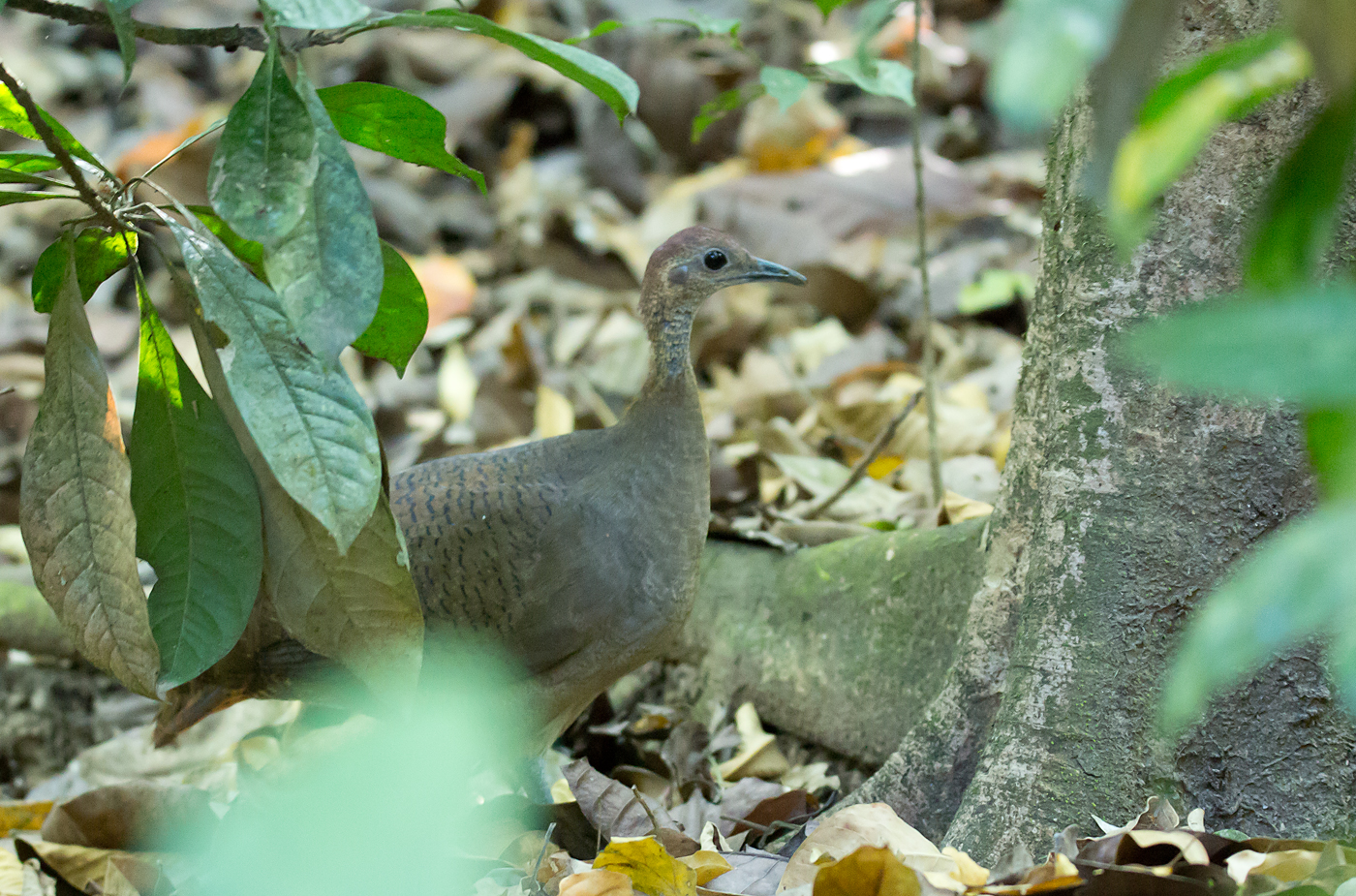
Great Tinamou - Tinamus major

In March of 2018, my wife and I visited Costa Rica. This was the second time we went birding in this Central American country. This time we went to a different habitat - the central and lowland forests. One of the places we birded was the Carara Park. Our guide, Carlos Zuniga, showed us a lot of species most of which were lifers for us.

While I was taking photos of a dove, Carlos who was trying to locate the source of some trilling that he heard, suddenly shouted, "tinamou!" and pointed at a moving object behind some tall bushes. I hurriedly went to where he was and was totally surprised because I wasn't expecting this species to be seen in a park. I was able to get just a few shots and, thankfully, one of those was good enough.

Canon 5D Mk III, Tamron 150-600 lens
ISO-6400, f5, 1/25


Monday, June 12, 2017

Andean Cock-of-the-Rock - Rupicola peruvianus

One of the most sought after birds in South America is the Andean Cock-of-the-Rock. Not only because of its flaming red color and unique crest, but because of its behavior. The brightly colored males would gather together in a lek and proceed with their quaint displays to attract the females.

We were lucky to have witnessed such behavior at the Refugio Paz de las Aves in Ecuador. The gloomy weather was discouraging as we approached the area near the lek. Then came the group at quite a distance at first. Then slowly the males moved closer to where a bunch awe-struck birders were watching them.

After we photographers had our fill, so to speak, it drizzled. We were glad to have had this rare opportunity of witnessing the star bird of Ecuador.


Friday, February 5, 2016

White Tern - Gygis alba

I couldn't help but chuckle the first time I saw this bird. My wife, Cynthia, and I were strolling around Kapiolani Park in Honolulu when we spotted this tern gracefully flying overhead. Somehow it looked different from the other terns we've seen. First of all it has a black narrow pointed bill which contrasted with an all white body. Add to that a roundish head that is atypical of its avian family.


The reason I smiled is because somehow it reminded me of the spokesperson of the famous fast food joint Jack-in-the-Box. That black pointy nose and white round head has an uncanny resemblance to the seabird we just saw.


This bird is officially called the White Tern (Gygis alba). I said "officially" because it is also called Fairy Tern and even Angel Tern. Somehow I tend to agree more with the latter name. A photo I took somehow supports my choice.


The White Tern inhabits islands in the tropical and subtropical waters of the south Atlantic Ocean, Indian Ocean and western and central Pacific. Breeds on small islands made of coral with some degree of vegetation, where it nests and roosts in trees of dense forest with thin branches, but also on rocky ledges and on man-made structures. (from identify.whatbird.com)

Monday, June 2, 2014

Philippine Eagle - Pithecophaga jefferyi

The Philippine Eagle is among the rarest birds in the world. In terms of size it is also considered the largest eagle. To see this raptor in the wild is in the bucket list of die-hard birdwatchers. It was therefore a privilege for me and my wife to see not just one, but three - a whole family - of these eagles flying free in the forests of Mt. Apo in Davao province.

At first we were reluctant to go the site where these huge birds roam because of several factors: 1) we thought that the fees involved were somewhat prohibitive, 2) the fickle weather - it had been raining hard two days before our intended date of arrival and 3) military activity in the area due the presence of rebels. After some serious deliberations, consultations with our guide, Pete Simpson, and lots of prayers, we decided to go. The rewards were way beyond our expectations! As I mentioned earlier, we saw both parents and the eaglet - something that other groups did not see. Not only that we daw the magnificent raptors within 2 hours of our stay there, whereas others had to wait for almost a whole day just to see just one of the parent eagles. The weather was beautiful and we never saw a single military personnel. The fees, as we learned later, were justifiable - the local tribe imposed that amount to limit access to the site so as to protect the eagle family especially the young one which was still in the nest.

In celebration of the Philippine Eagle Week (first week of June) allow me to feature our photographs of this majestic bird:


immature philippine eagle, pithecophaga jefferyi
The eaglet
Philippine Eagle, Pithecophaga jefferyi
An adult eagle photographed by Cynthia with only a 420mm lens, handheld!
Philippine Eagle

Philippine Eagle

Please click on the images to see a larger view. Thanks!

Thanks to Pete Simpson for bringing us to the site and to the local Barangay and Bagobo Tribe for their hospitality.

Thursday, January 30, 2014

Black-necked Grebe - Podiceps nigricollis

When news came out that a Black-necked Grebe was seen in a fish pond in Laoag City birders from the greater MetroManila area were excited. Quite a number of them traveled the 500 km distance just to see this rarity. My wife and I were among them. We were honestly quite surprised at how uncommon this bird was in this part of the world - and that birders would drive such long distance just to see it. Considering that this one wasn't even in its beautiful breeding plumage.

For Cynthia and myself, this would no longer be a lifer for us having seen it quite a number of times in California.

The Black-necked Grebe, known as Eared Grebe in North America is the most abundant grebe in the world occurring in all continents except Australia and Antartica. Those that inhabit northeastern Asia migrates in winter to Southern China and Taiwan. In the Philippines it had only been recorded twice - the first one back in 1929 in Laguna de Bay and the second - this one in Laoag City.

Laoag - non-breeding
December 31, 2013
Canon 5D Mk III, 500mm+1.4X (700mm)
ISO-640, f9, 1/640


Black-necked Grebe

California - non breeding
December 30, 2006
Canon 30D, 500mm+1.4X (700mm), tripod
ISO-250, f9, 1/640


Black-necked Grebe

California - breeding
April 4, 2005
Canon 20D, 500mm+1.4X (700mm)
ISO-200, f8, 1/500


Black-necked Grebe

Wednesday, November 20, 2013

Green-faced Parrotfinch - Erythrura viridifacies

Last January, 2013, word got around the birding community that Green-faced Parrotfinches were seen at a mountainside in Samal, Bataan province. The person who saw them was Stinson, an employee of Dr. Joey Soriano, who in turn informed his co-members at the Wild Bird Club of the Philippines (WBCP). 

This species is very seldom observed and is classified as uncommon and vulnerable according to Birdlife.org. Prior to this year, this Philippine endemic was last seen in 2008 at Alcoy Forest in the island of Cebu. Although mainly a resident of Luzon, there were several sightings in the islands of Panay and Negros as well. It has been said that before World War II, these colorful finches were captured by the thousands and sold on the streets of Manila with some even shipped to San Francisco for the caged bird trade. (source: birdlife.org)

Scientists concluded that this recent irruption (a sudden increase in number) was due to the flowering bamboo trees in the mountains of Bataan.

About 5 inches (12-13 cm) in length, these birds are entirely green except for bright red upper tail coverts and tails. Females are similarly colored and the only distinguishing characteristic is that they have shorter tails and show some buff on their bellies and vents. The bills of both male and female are thick and dark grey in color.

Needless to say, such rarity brought birders to Bataan with the hope of seeing and even photographing the Green-faced Parrotfinches. Our first attempt on January 21st was a heartbreaker. We saw about seven parrotfinches but they were across a ravine that even with my long lens I still was unable to get a good photo.

However, luck was with us on our second trip five days later. The birds were so near that at times I had to step back to a get full view of them.

For the stories about these two trips to Bataan, please see here and here.

Canon 7D, 300mm+1.4X (420mm)
ISO-400, f6.3, 1/400
handheld


Green-faced Parrotfinch

Canon 5D2, 100-400 @ 400mm
ISO-640, f5.6, 1/400
handheld

Green-faced Parrotfinch

Canon 7D, 300mm +1.4X (420mm)
ISO-400, f7.1, 1/400
handheld

green-faced parrotfinch

Thursday, November 7, 2013

Indigo-banded Kingfisher - Ceyx cyanopectus

Villa Escudero in Tiaong, Quezon province is one of the places where sightings of this uncommon Philippine endemic is almost guaranteed. Lately, however, a very confiding couple has been seen regularly at the La Mesa Ecopark in Quezon City. Both male and female were so oblivious of its "audience" that birders and bird photographers had a heyday taking pictures of both.

Indigo-banded Kingfishers are small (about 5-1/2 inches) brightly colored birds that inhabits forest streams and ponds where they hunt for tiny fish and insects. Their distinguishing marks are blue bands across their breasts, two for the male (and forming a heart shaped rufous center) and one for the female. They are found in Luzon and Mindoro and another subspecies in Negros, Panay and Cebu.

Indigo-banded Kingfisher - Ceyx cyanopectus - Male
La Mesa Ecopark,  October 15, 2013

Canon 5D Mk III, 500mm+1.4X, half gimbal on tripod
ISO-800, f5.6, 1/30


Indigo-banded Kingfisher


Indigo-banded Kingfisher - Ceyx cyanopectus - Female
La Mesa Ecopark, October 26, 2013

Canon 5D Mk III, 500mm+1.4X, half gimbal on tripod
ISO-3200, f5.6, 1/50


indigo-banded kingfisher

Monday, October 21, 2013

American Kestrel - Falco sparverius

American Kestrels are not difficult to find in Southern California. We saw them in the different parks and nature reserves. For a raptor it has a beautiful coloring, especially that of a male. They are the smallest members of the Falcon family in North America although their range extends all the way to South America. It's diet consists of grasshoppers, lizards, mice and an occasional small bird like a sparrow.

American Kestrel - Falco sparverius
Peck Road Water Conservation Park, Arcadia, California
December 3, 2005

Canon 20D, 300mm+1.4X (420mm)
ISO-200, f/8, 1/500, handheld

american kestrel


Friday, October 11, 2013

Allen's Hummingbird - Selasphorus sasin

Sycamore Canyon is a small park in the foothills of the San Gabriel Mountains in Whittier, California. Despite its proximity to urban areas and to the freeway, it harbors a number of bird species.  One of these is the Allen's Hummingbird.

Allen's Hummingbirds always pose an identification problem because of its similarity with the Rufous Hummingbird which shares its range and habitat. Both have the striking rufous coloring and bright red gorget. However, Allen's have green feathers on its head, upper back and rump. They also have a more limited range in the western USA and Mexico. It is not unusual to find these colorful birds in urban areas. Next to the very common Anna's, Allen's are probably the other hummingbird one can easily find in southern California.

Allen's Hummingbird - Selasphorus sasin
Sycamore Canyon, Whittier, California
April 30, 2005

Canon 20D, 300mm+1.4X, handheld
ISO-100, f7.1, 1/400

allen's hummingbird


Tuesday, October 8, 2013

Acorn Woodpecker - Melanerpes formicivora

Acorn Woodpeckers are the most common woodpeckers in California. They were so named because of their habit of storing acorns in crevices and holes of trees, most of which they themselves drill. These birds are quite noisy with their parrot-like croaking. Another peculiar habit of Acorn Woodpeckers is their communal nesting. Several females lay eggs in a single nest and the whole community - including the males and juveniles - take turns in raising the chicks.

Acorn Woodpeckers live year-round in oak and pine-oak woodlands of western and southwestern USA all the way down to Central America.

Acorn Woodpecker - Melanerpes formicivora
Irvine Regional Park, California
February 9, 2008

Canon 20D, 300mm lens, handheld
ISO-400, f8, 1/1000


Sunday, September 8, 2013

Spotted Wood Kingfisher - Actenoides lindsayi

This beautiful kingfisher had eluded us ever since we came to the Philippines in 2010. In October of 2011, sightings of a Ruddy Kingfisher were reported at the Loyola Grand Villas - a place not far from where we live. It was while staking out for that kingfisher that we saw the Spotted Wood instead. A cooperative one at that! It was some sort of redemption from all the frustrations we experienced in looking for this bird. I was so glad that I wrote a "parable" about it. 

The Spotted Wood Kingfisher is endemic to the Philippines and can be found in Luzon, Panay and Negros islands. The male is more colorful than the female with bright aqua blue crown and cheek stripe. They prefer the forests staying mostly in the dark recesses.

Spotted Wood Kingfisher - Actenoides lindsayi - female
Loyola Grand Villa, Quezon City
October 17, 2011

Canon 5D Mk II, 500mm+1.4X (700mm)
ISO-2500, 1/80, f6.3

spotted wood kingfisher female

Spotted Wood Kingfisher - Actenoides lindsayi - male
La Mesa Ecopark, Quezon City
October 15, 2013

Canon 5D Mk III, 500mm+1.4X (700mm)
ISO-3200, 1/15, f7.1


spotted wood kingfisher male